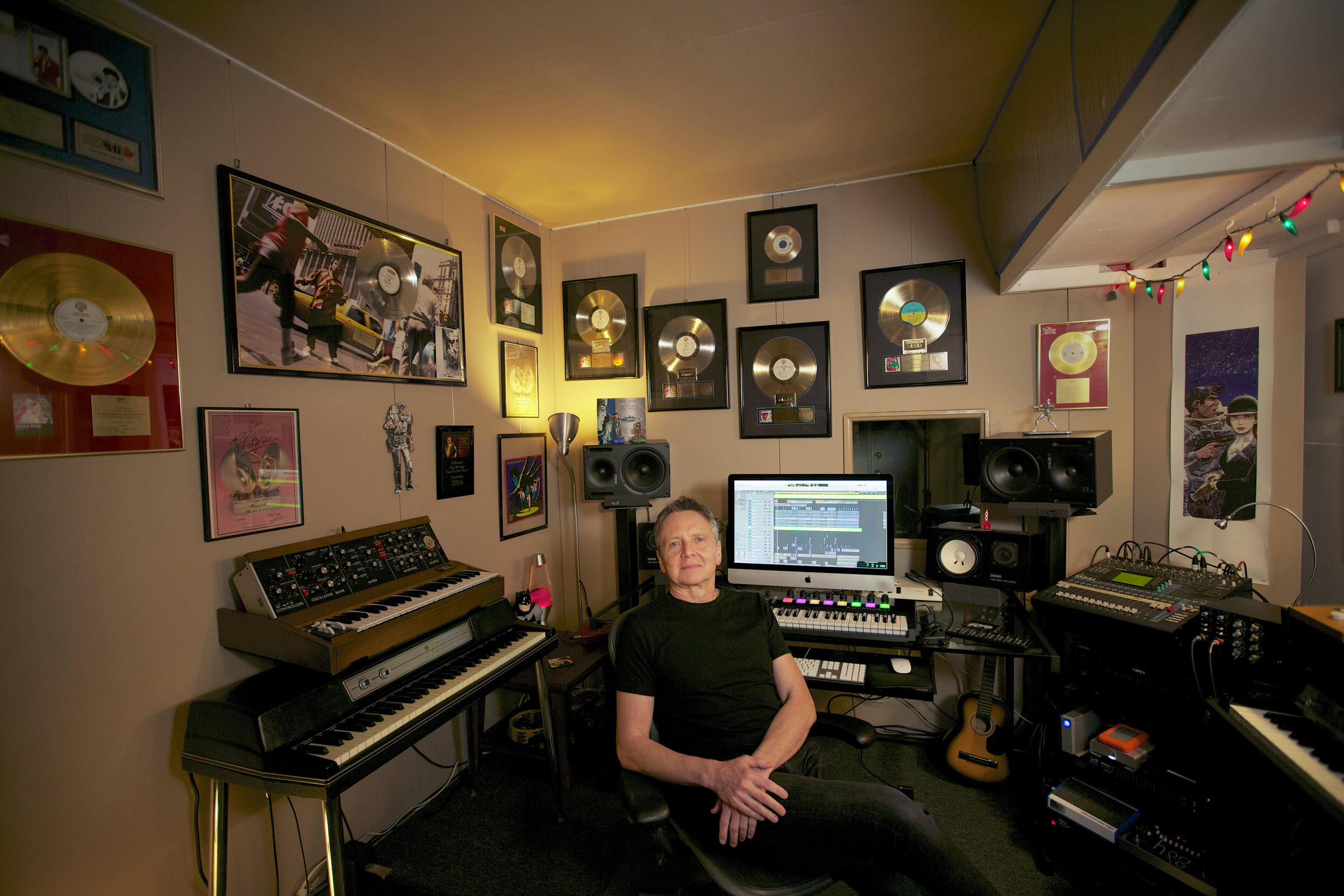
With the pandemic-related lockdown and cancelled touring across the board, 2020 proved to be one of the most difficult years ever for working musicians. Grammy nominated composer, keyboardist and producer Philippe Saisse met those challenges head on with one of his most prolific and productive years ever, scoring three number one smooth jazz singles, collaborating with legendary guitarist Nile Rodgers on a prominent Fender commercial and creating a global community organized music project with emerging musicians from around to world to raise money for the Sean Penn co-founded CORE, an organization supporting high risk populations impacted by COVID-19.
Released in April, Saisse’s solo single “Eva Kant Dance” hit #2 on the Billboard Smooth Jazz Songs chart and spent five weeks at #1 on the Mediabase SmoothAC chart. He also hit the pole position on the Billboard chart as co-writer and co-producer arranger of Rick Braun’s “Crossroads” and Dave Koz’s “Side By Side” (a duet with David Sanborn); the Koz song spent five weeks at #1. Saisse is also the arranger/pianist on Euge Groove’s single “Sing My Song.” The keyboardist’s first single of 2021 is “The City Never Sleeps,” which features legendary bassist Marcus Miller and drummer Poogie Bell – both of whom Saisse played with in an NYC based trio in the early 90s. Both tracks will ultimately be included on Saisse’s upcoming solo album follow up to his 2009 album At World’s Edge, which received a Grammy nomination for Best Contemporary Jazz Album, the track.
Making the decision to be more creative in the studio than ever while confined at home, Saisse collaborated with his longtime friend and mentor, three time Grammy winner and Rock and Roll Hall of Famer Nile Rodgers on “Inside the Box,” which Rodgers performed in a hugely popular commercial for Fender’s Acoustasonic Stratocaster guitar. The video of the commercial has over two million views on YouTube, and a behind the scenes discussion clip has over 450,000.
Dutch saxophonist Candy Dulfer (Prince, Dave Stewart) has also been tapping on Philippe and Nile’s music and production for her upcoming album. “Convergency” has already been recorded and mixed and a music video featuring all three musicians has just been completed.
Saisse’s two successful stints as leader of The Philippe Saisse Trio - with acoustic bassist David Finck and drummer Skoota Warner, and later including Gumbi Ortiz - began with their #1 single, a Fender Rhodes driven version of Steely Dan’s “Do It Again” from the BODY and SOUL sessions. The track spent six weeks at #1 on Radio & Records’ airplay chart (and 20 weeks in the Top Ten), was #1 for five weeks at Smoothjazz.com and was the #6 played track in the format for the years.
Reconnecting in the mid-2010s, the trio scored five hits on the Billboard Smooth Jazz Songs chart, starting with “And So But Then,” which hit #8 and ranked as one of Billboard’s Top 20 Smooth Jazz Songs of the Year. The other hits from On the Level! Included “Blue Rondo” (#6), “Lucky Luke” (#10) and “Marienbad” (#20).
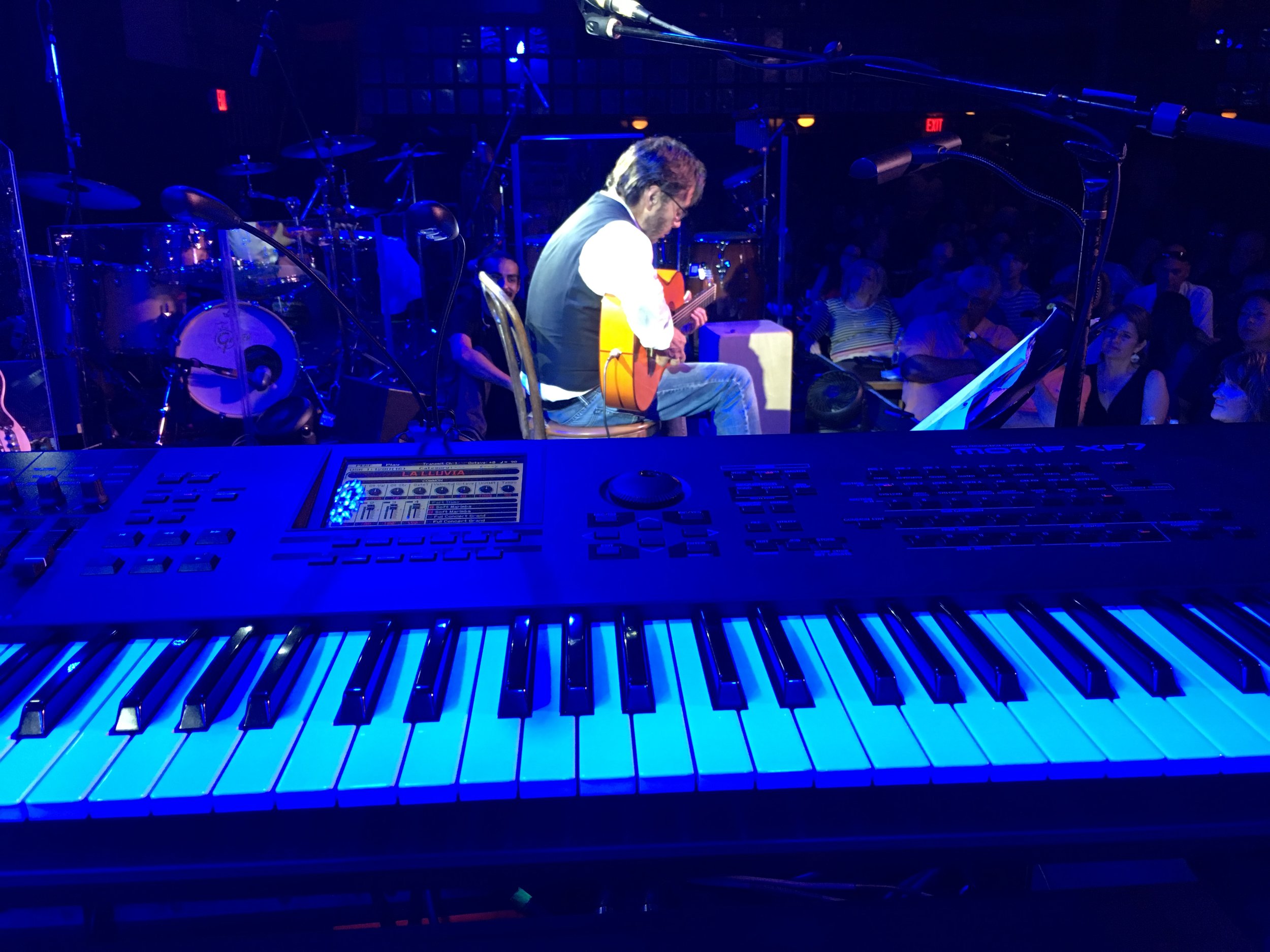
A recipient of the Médaille de Chevalier des Arts et Lettres from the French Government and Minister of Arts and Communication, the French born Saisse has also been a mainstay on Smooth Jazz radio these past few years working with other artists. He appeared on the late Jeff Golub’s “Swagster” (Five weeks at #1 on Billboard’s Smooth Jazz Songs chart), Rick Braun’s Top Ten hit “Can You Feel It” and Al Di Meola’s “La Lluvia,” which Saisse also penned; “La Lluvia hit the Top 20 on the Billboard Smooth Jazz National Airplay chart, the legendary guitarist’s first hit in that format. In addition, Saisse is featured on Marc Antoine’s latest #1 single “Why Not” and played on several other tracks from the guitarist’s 2016 album Laguna Beach.
In 2019, Saisse co-wrote, produced and played on “State of Mine,” a track from Rodgers and CHIC’s 2018 album It’s About Time. In November of that year, Saisse toured with Japanese jazz fusion ensemble T-Square in Japan; those concerts were filmed and recorded to create the DVD T-Square Live at the Tokyo Blue Notes featuring Philippe Saisse. Other recent and current projects include arranging for Donny Osmond’s next album and conducting the Royal Philharmonic at Abbey Road Studios in London for a Rolex commercial.
From 2009-2011, he toured Europe and Japan as part of the PSP trio with Simon Phillips and Pino Palladino, both of whom were featured on At World’s Edge. Saisse’s history with Phillips goes back to the early 80s, when both toured with guitar legend Al Di Meola; it was Saisse’s first-ever jazz gig. PSP released a Live in Tokyo album and a follow-up EP and have just released a Live in Zoetermeer DVD.
Coming full circle, Saisse did over 100 North American dates in throughout 2016 as keyboardist and Music Director with Di Meola’s new lineup that includes Ortiz, bassist Elias Tona, drummer Luis Alicea and new comer and violin sensation Evan Garr. These include performances at the Montreal Jazz Festival and Toronto Jazz Festival. In May 2016, Saisse performed the Emerson, Lake & Palmer classics “From The Beginning” and “Nutrocker” as part of an all-star lineup at The Official Keith Emerson Tribute Concert at the El Rey Theatre in Los Angeles. In early 2017, Saisse toured with the latest leg of Di Meola’s band tour throughout the East Coast and Canada (Montreal and Quebec City).
As busy and in demand as he is with outside projects, Saisse is most excited about his ongoing creative shift back to his solo career – and using his own label, Bandar Log Music, to release material. The success of On the Level has afforded him the creative freedom to produce and market his own work in ways that make sense in the 2020’s world of music consumption, including pursuing his passion for creating exciting concept and live performance videos.
Jonathan Widran
(updated 05/2021)